

What are the best
A narrow paddle face or a square, more traditional one? What about price? How much should you pay for a beginner
OK, OK—figuring out which paddle is the right one for you isn’t exactly straightforward or easy.
With so many paddles on the market and an enormous variety in shape, size, material, and cost, starting the search for a new paddle can quickly become overwhelming. Especially if you’re new to the sport and don’t want to go overboard with your budget!
To help, we’ve rounded up five of the best
Whether you’re a complete beginner or looking to upgrade your gear, we’ve got you covered in our buying guide of the best
In this Article:
- Best Trendy Paddle: Recess
Pickleball Paddle - Best Overall Value: ONIX Graphite Z5
- Most Affordable Paddle: JOOLA Essentials
- Best Quality Paddle: Selkirk Latitude
- What Exactly Makes a Good Beginner Pickleball Paddle?
- What’s the Best Shape of Pickleball Paddle for Beginners?
- Our Top Choice: The ONIX Graphite Z5 paddle
- FAQs
For the casual but trendy player: Recess Pickleball Paddles

- Shop directly on Recess for 10% off your first paddle
- Durable fiberglass surface
- Designed in the USA
- High-quality honeycomb core

Hands down, Recess Pickleball makes some of our favorite
These are great paddles for the more stylish, aesthetic pickleballers, but the quality certainly doesn’t suffer either! I’ve been really happy with the quality of my Recess paddle over the last year.
I’ve written an in-depth review of my Recess Pickleball paddle including what I think about the design, durability, price, and a ton of other great info. Give it a read if you’re looking for a trendy
Best Overall Value: ONIX Graphite Z5

- Co-designed by Pickleball Pros - For optimal power and precision
- Paddle Shape (16"x8") - Boosts reach and power
- Atomic13 Tech - Reduces shock, enhances speed and power
- Superior Touch - Consistent coating for soft impact, maintains spin and pop
ONIX is the highest and most rated paddle on Amazon, and for good reason.
This bad boy is an absolute gamer-changer for beginner players as it strikes that sweet spot between power and control, giving newbies the confidence to dominate the court. And it’s lightweight too, weighing in at a breezy 7.5 ounces, so you can play for hours without feeling like you’re carrying a ton of bricks.
But the icing on the cake? That cushion comfort grip! Say goodbye to blisters and hello to pure, shock-absorbing bliss. Trust me, the ONIX Graphite Z5 is your trusty sidekick, ready to guide you on your journey to
Most Affordable Paddle: JOOLA Essentials
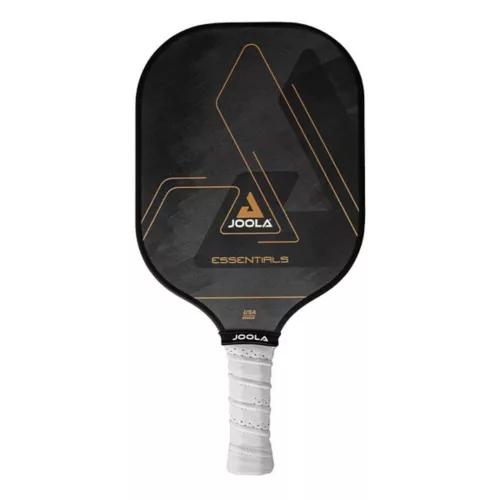
- Large sweet spot
- Provides reduced vibration
- Anti-slip ridge grip
- Multiple layers of fibreglass with a well-balanced combination of control, power, and spin
I’ve written an entire blog post about JOOLA being the best inexpensive pickleball paddle you can buy right now.
This paddle’s comfy grip handle and feather-light design make it a true standout among budget-friendly choices for beginners.
Light yet tough, and featuring edge guard protection plus a generous sweet spot, it’s designed to amp up your game without burning a hole in your pocket.
And let’s not forget the cherry on top: a sleek design that’ll have you feeling like a superstar on the court – all while keeping your bank account smiling.
Learn more about what makes the JOOLA paddle so great in my blog post here.
Best Quality Paddle: Selkirk Latitude

- Made in the USA
- USAPA Tested & Approved
- WIlson's widest paddle face (8.25" wide)
- Amazing responsive "Sweet Spot" coverage
- Form-fitting grip that won't slip from your hand during aggressive play
Selkirk paddles will always win for best quality in my books because they are one of the few companies whose paddles are actually made in the USA (specifically, Coeur d’Alene, Idaho). Most other
Selkirk promotes caring for and cleaning for your
Selkirk makes a few expensive, advanced paddles, like the new Vanguard Power Air, but they also offer a beginner-friendly line of
What Makes a Good Beginner Pickleball Paddle?
With so many paddles on the market in 2023, it’s hard to figure out which one might be right for you—especially if you’re a beginner. Here’s what you should be thinking about:
Key factors to think about when choosing a
- The size of the paddle face
- The weight of the paddle (most paddles nowadays are fairly lightweight)
- The grip/length of the handle
- The material of the paddle
- The look and design of the paddle (hey, this is important, too!)
Paddle Size
When choosing a
Pickleball paddles come in a range of sizes, from traditional, square paddle faces to longer, narrower paddles.
Square paddles have larger sweet spots (the area on the paddle where you make contact with the ball), which can help as a beginner when you’re making shots.
Narrower paddles are more maneuverable but have smaller sweet spots so your accuracy could suffer.
As a beginner, you’ll want to opt for a traditional, square paddle face—a medium-sized paddle that will give you both control and power as you learn the game.
Paddle Weight
Besides size, weight matters in selecting a
Heavier paddles have more power behind them but can also be harder to maneuver; lighter paddles offer better maneuverability but less power.
So, if you want something that’s easy to swing yet still provides enough pop for those sneaky drop shots, go with a lightweight or mid-weight option.
Most
Paddle Grip
Don’t forget about grip! Your grip should be comfortable and secure—not too tight or too loose—so that you can hold your paddle confidently during play.
Most paddles come with their own pre-made grips already installed, but if yours doesn’t, no worries!
You can always buy additional tape to keep your grip, well, grippy.
Grip size is also an important factor when selecting a paddle. The standard grip size is 4 ¼ inches wide by 5 ½ inches long with 1/8 inch of cushioning on either side of the handle.
I consider this the “average” grip size and it works well for most players. However, if your hands are larger or smaller than average, it might be worth investing in a custom-sized grip that fits your hands better.
Paddle Materials
The material of your paddle also has a big impact on its performance on the court.
The most common materials used to make
- Wood – the original material used in
pickleball paddles, quite heavy and clunky - Graphite – lightweight material with solid power
- Aluminum – lightweight material with excellent control
- Fiberglass – a popular option because of its combination of both power and control
Depending on what type of player you are (offensive or defensive) one material might work better than another. In 2023, I would advise staying away from wooden
Paddle Price
While there are plenty of expensive options out there, beginners don’t need to break their budgets just yet.
I’ve found many good beginner paddles for less than $100, making them an affordable option for anyone who wants to try their hand at
Investing $80 to $120 in a good

What’s the best shape of pickleball paddle for beginners?
Square
Most
Smaller, more narrow paddles are better for more experienced players, as they allow for more precision when hitting the ball. These paddles are more expensive and not recommended for total beginners.
Ultimately, it is up to the individual player to decide which type of paddle is right for them. You’ll probably own many different shapes of paddles throughout your
So which pickleball paddle would we choose for a beginner?
Choosing the perfect
Our overall pick for the best
- Co-designed by Pickleball Pros - For optimal power and precision
- Paddle Shape (16"x8") - Boosts reach and power
- Atomic13 Tech - Reduces shock, enhances speed and power
- Superior Touch - Consistent coating for soft impact, maintains spin and pop
When looking for a good beginner
With these criteria in mind, it won’t be long before you’re smashing those balls with confidence. Good luck and happy picklin’!
FAQs
Beginner
It is possible to find a paddle for under $50 – but if you’re planning to play for years to come it’s worth focusing on quality. Most
The best paddle material depends on what type of game you like to play.
Graphite is a lighter-weight material that maintains the ability to produce good power. But fiberglass is another popular option because of its combination of both power and control.
Most large sporting goods stores in America sell at least a small selection of
We like to order online, as we appreciate reading other customers’ reviews and sifting through submitted photos. Wilson has lots of variety and is a good place to start.
Besides size, weight is an important factor for selecting a
Heavier paddles have more power behind them but can also be harder to maneuver; lighter paddles offer better maneuverability but less power.
Graphite and fiberglass are the two most common materials used in
Graphite paddles are typically lighter and have a smaller sweet spot, while fiberglass paddles are heavier and have a larger sweet spot.
Graphite paddles also tend to have more spin, but fiberglass is more durable.


