

Pickleball has exploded in popularity, and so has interest in the equipment used—especially paddles. But have you ever wondered how
Paddles can be crafted using a handful of different materials and designs, and the process in which they’re made will depend on where—and how—they’re manufactured.
Most paddles on the market today are manufactured in China, but there are some standout brands that take pride in keeping operations within the U.S. (we’re lookin’ at you, Selkirk).

This article explains in simple terms how
Whether you’re new to
Types and Varieties of Pickleball Paddles
Pickleball paddles vary widely to suit different skill levels and playing styles.
Beginners may prefer larger, lighter paddles for easier ball control, while intermediate/advanced players might opt for smaller, heavier paddles for more power and precision.
Custom paddles are also available, tailored to individual preferences in weight, grip size, and design.
The most widely used materials for
- Graphite: Lightweight and powerful, graphite paddles offer excellent control and are favored by experienced players.
- Composite: Versatile and popular, composite paddles are made from a mix of materials like fiberglass or carbon fiber, providing a good balance of power and control.
- Aluminum: Known for their strength and lightness, aluminum core paddles offer good control but may lack power.
- Polymer: Soft and quiet, polymer core paddles are lightweight and offer a good mix of control and power, making them popular in modern designs.

Thermoformed Paddles: Manufacturing Process
How are thermoformed paddles made?
- Material Selection: Manufacturers begin with a core material, like polymer or aluminum.
- Heating: The core is heated until pliable.
- Molding: While hot, it’s pressed into the desired shape.
- Cooling: The paddle is cooled to retain its new form.
- Finishing Touches: Surfaces are added for grip and aesthetics.
Watch this video from Dink
Technological Advancements in Paddle Manufacturing
The
Recent advancements in 2022 and 2023 include aerodynamic designs for reduced air resistance, vibration dampening technologies for better comfort, and surface textures that enhance ball spin.
These technological developments are completely reshaping the game! Check out Luxe’s new luxury paddle that allows some air through openings in the base of the paddle:
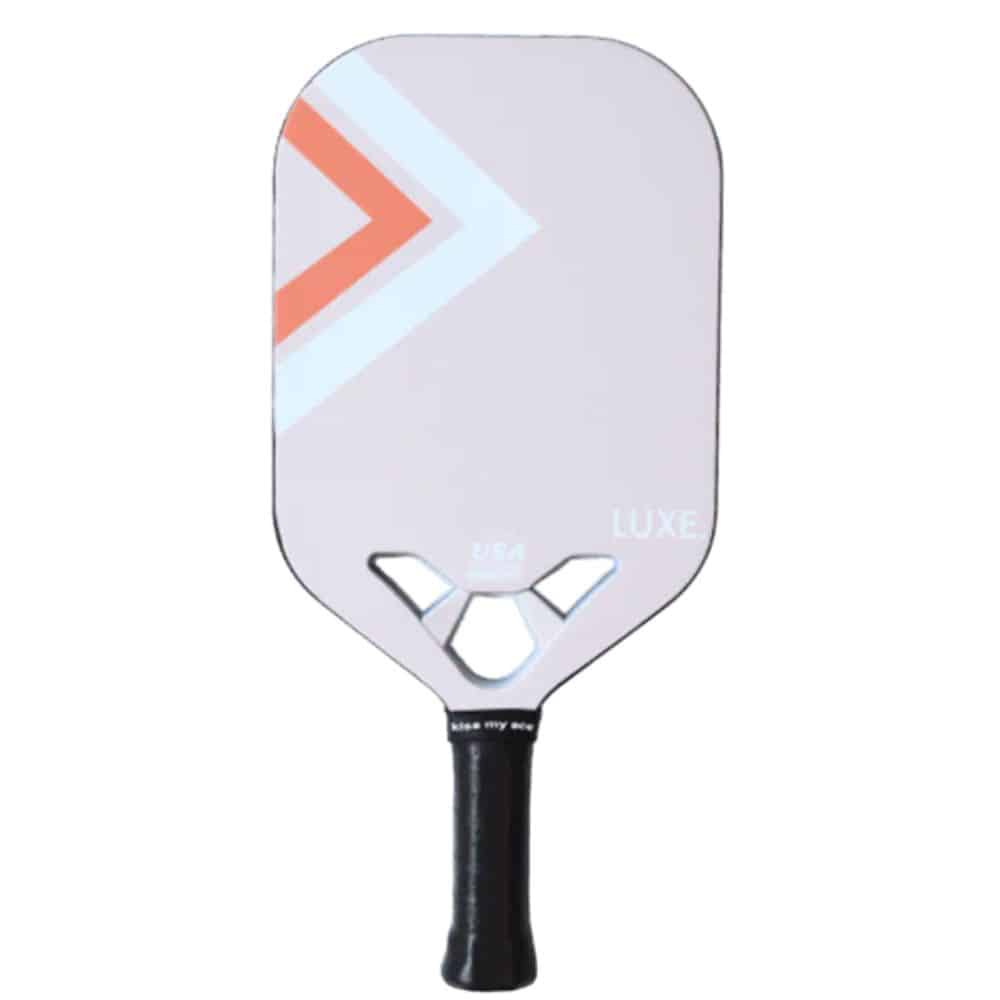
Luxury Collection - Draft Pink | LUXE Pickleball
- Shop directly on Luxe for 10% off your first paddle
- Open-throat design for quicker hands at the net
- Textured carbon fiber surface
- Foam-filled edges to increase the sweet spot

3D Printing and Pickleball Paddles
Can you 3D print a pickleball paddle?
Yes, you can 3D print a
- Material Constraints: Most 3D printers can’t use materials approved for official paddles.
- Not for Competitive Use: 3D printed paddles are more for novelty or personal use.
How do you add power to a pickleball paddle?
Increasing the power of your
- Choose Heavier Paddles: Heavier paddles can generate more power.
- Material Matters: Paddles with a rigid core (like graphite) can enhance power.
- Grip and Technique: Improving your grip and swing technique can also increase power.
Identifying Fake Pickleball Paddles
Are there fake pickleball paddles?
Yes, like many sports equipment, counterfeit
- Check Branding: Look for well-known brands. Our favorites are Recess Pickleball (designed in Texas) and Selkirk Paddles (manufactured in the US!).
- Quality Inspection: Examine the material and build quality. If buying online, be sure to read reviews!
- Purchase from Reputable Stores: Buy from known sports equipment stores or official online retailers.
How can you tell if a pickleball paddle is bad?
- Surface Damage: Cracks or peeling indicate a paddle is worn out
- Sound Changes: A hollow or dull sound when hitting the ball can signal internal damage
- Handle Issues: A loose or uncomfortable handle affects play quality
Can pickleball paddles get wet?
Pickleball paddles can handle a bit of water, like light rain or splashes, but it’s not a good idea to get them really wet.
Don’t leave them out in the rain or dunk them in water. How well they stand up to water depends on what they’re made of. Some materials are better at keeping water out than others, like graphite, or plastic or polymer materials.
Final Thoughts
Pickleball paddles are essential for enjoying the game. Understanding how they’re made and what makes a quality paddle can enhance your playing experience and equipment choices.
Paddle companies like Recess and Selkirk take a lot of care and pride in designing quality products for players. That’s why they’re our top choice for paddles.

- Shop directly on Recess for 10% off your first paddle
- USA Pickleball-Approved
- Classic Honeycomb Interior
- Screen-printed Fiberglass Surface
- The Same Sweatproof Condensed Foam Grip Used in the Tennis and Golf Industry

- Handcrafted Excellence: Made in the USA for peak pickleball performance.
- Advanced Fiberglass Tech: Achieve unparalleled ball spin and deflect opponents’ moves.
- X5 Core Smoothness: Enjoy consistent speed and reduced vibrations.
- Pro-Endorsed: USAPA approved and loved by top pros.
- Power & Balance: Epic AMPED’s handle delivers unmatched control.
Find our top picks for paddles here:
- Recess Pickleball Paddle Review
- Pickleball Paddles Under $100
- Best Pickleball Paddles for Intermediate Players


